


FAQs
Nature Refined, Quality Defined
Green Science for better living

Is Your Test Method Masking the True Strength of Your Agar? A Technical Divergence
While reviewing the IS 6850:2023 (Indian Standard for Bacteriological Agar), a critical difference in testing methodology caught our attention. This isn't about price; it's about the fundamental science of how we measure quality.
The Core Technical Discrepancy: Dissolution Protocol
According to Clause 3.2.1 of IS 6850:2023, the validation for gel stability involves autoclaving the agar solution (e.g., 121°C for 30 minutes) directly.
Conversely, the prevailing practice in China (and in many high-sensitivity international labs) mandates a two-step process:
Full Dissolution: Boiling the agar in a water bath until completely dissolved.
Sterilization: Autoclaving the already clear solution.
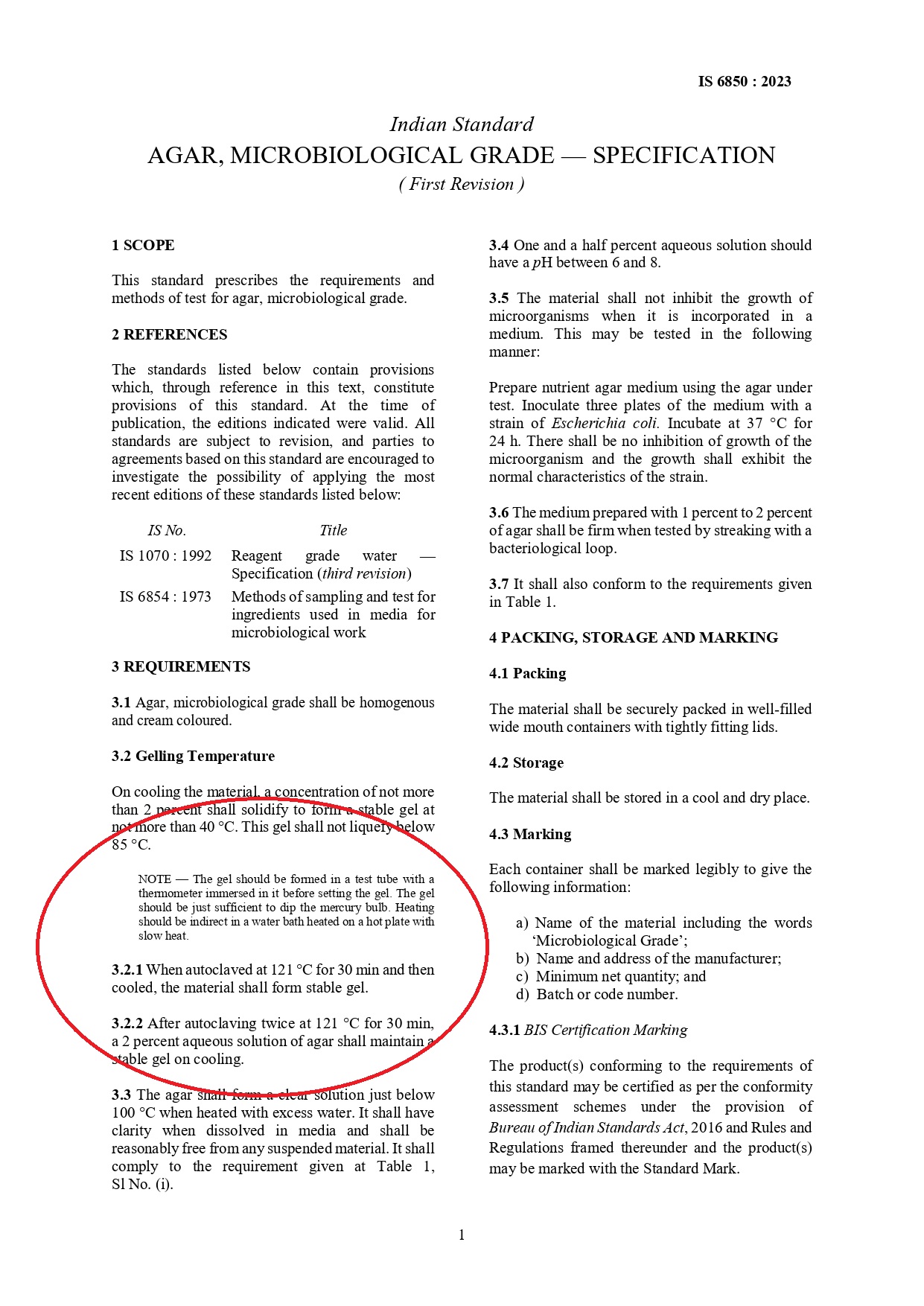
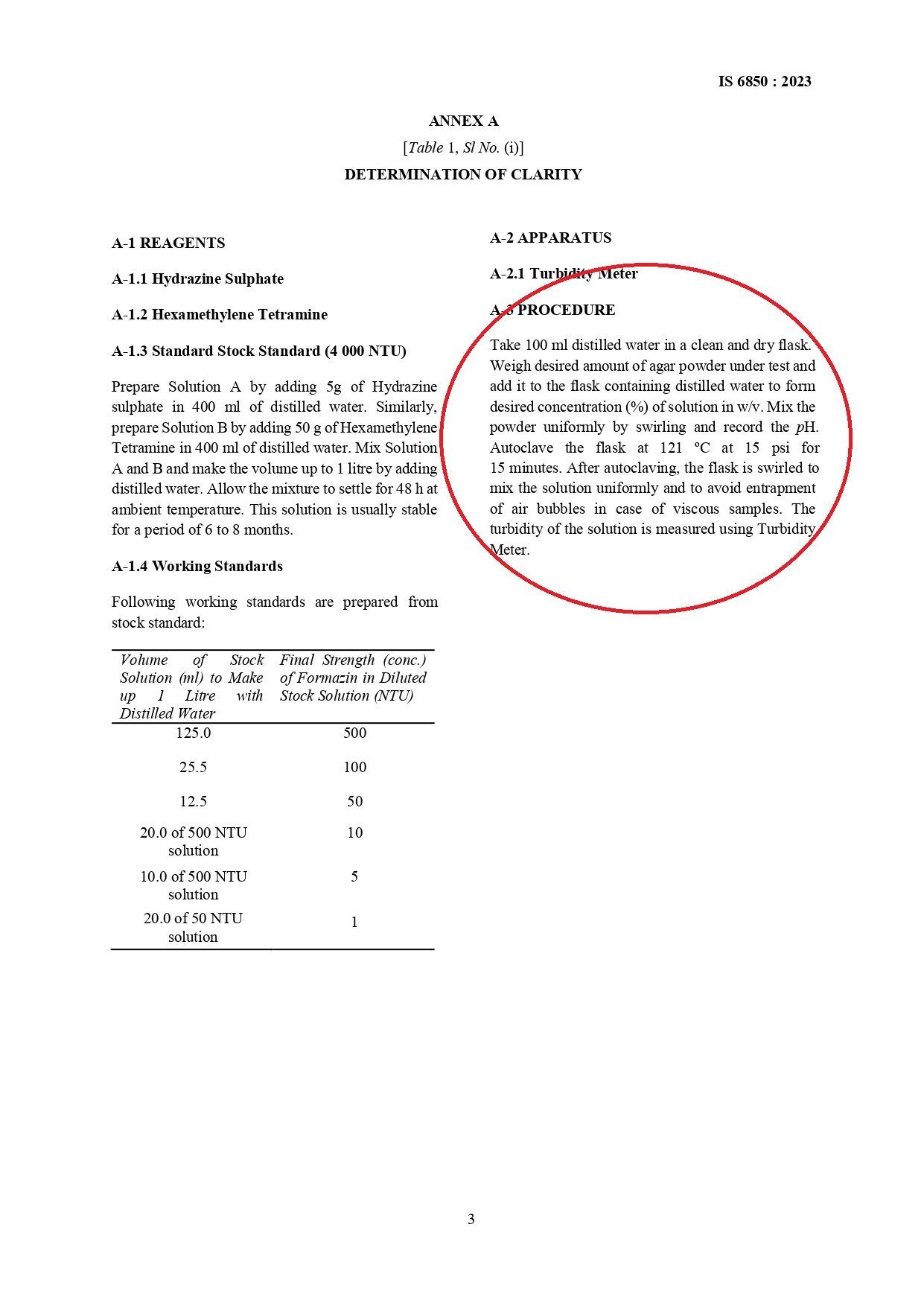
Why does this procedural gap matter?
1. The "Incomplete Hydration" Effect:
Agar is a stubborn polysaccharide. Without the initial boiling phase, high-strength agar often fails to fully hydrate during the ramp-up to sterilization temperature. This results in micro-gels or undissolved particles that do not contribute to the gel network.
Furthermore, this incomplete dissolution directly impacts optical performance. Solutions tested via the direct autoclaving method often exhibit high turbidity (NTU >10), failing the clarity requirements that are critical for accurate microbial observation.
2. The Reproducibility Problem:
The IS 6850 method prioritizes simplicity and compliance, which is suitable for large-scale public procurement. However, it sacrifices the precision needed to measure the true upper limitof a product's gel strength. Two labs following the same standard might get different results if their autoclave ramp rates differ.
The Industry Implication:
This methodological difference creates a "hidden tax" on performance. A product with a potentialstrength of 900+ g/cm² and clarity of <10 NTU might test significantly lower simply because the test protocol didn't allow it to express its full capability.
As a Microbiological Agar manufacturer based in China, we highly value the Indian market and its customers. We hope to engage in more technical dialogue with our Indian counterparts to address these challenges and advance the industry together.
Are you confident your current method captures the true potential of your ingredients? Let’s discuss.


Email: info@cagcolloids.com
Tel: 0086-19884908291 / 0086-573- 80890620
Website: www.cagcolloids.com
Address: No. 399, East Tongfu Road, Tongxiang City, Zhejiang Province. China.